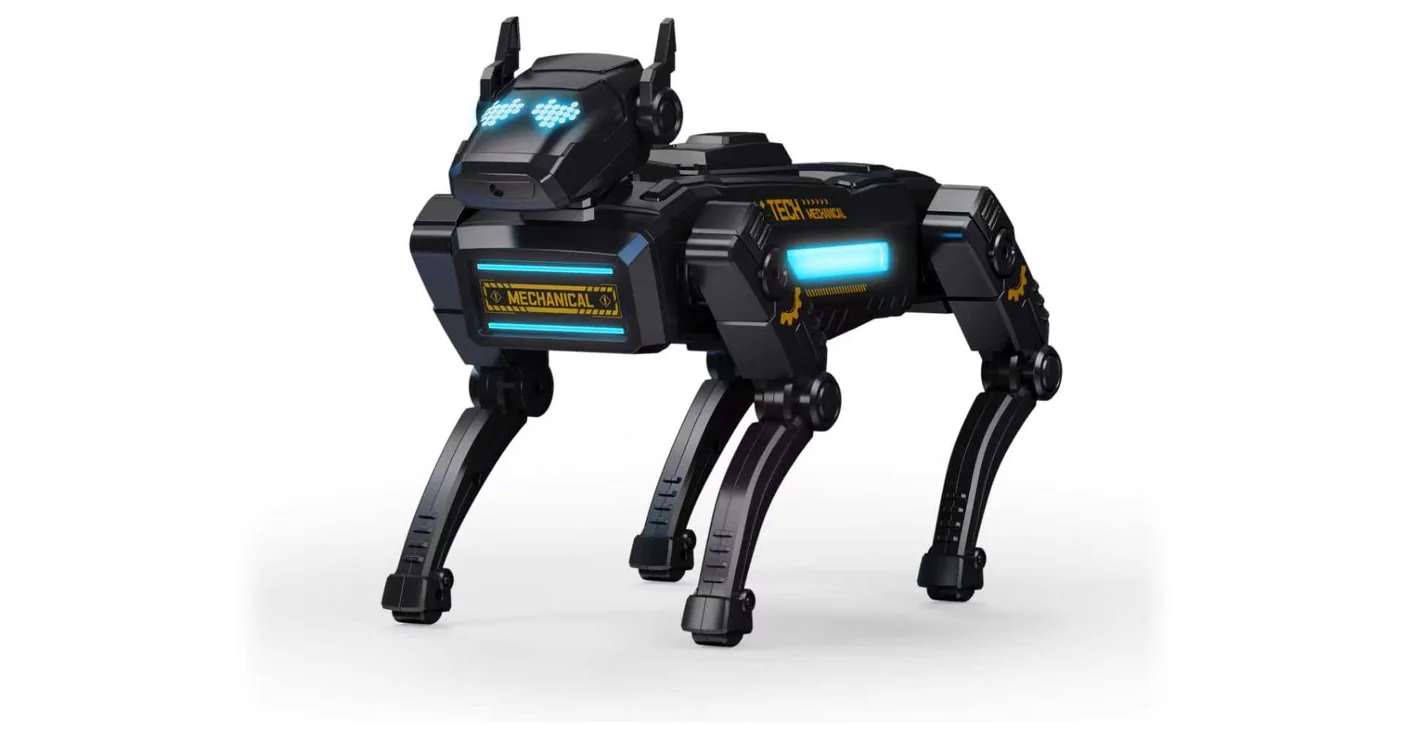
Every remote control dog we ship contains a lithium battery, and that single fact shapes the whole logistics plan. Lithium cells are classified as dangerous goods, and UN 38.3 is the test standard they must pass before any airline, sea carrier or freight forwarder will touch them. Buyers who discover this at the booking stage lose weeks. Buyers who ask for it before the PO ships lose nothing.
This article explains what UN 38.3 actually covers, which documents travel with a lithium-powered toy shipment, and the five questions worth asking any supplier before you commit.
What UN 38.3 Actually Tests
UN 38.3 is not a product safety certificate for the toy — it is a transport test for the cell and the pack. The test series simulates the abuse a battery might meet in transit:
| Test | What it simulates |
|---|---|
| T1–T3 Altitude, thermal, vibration | Pressure and temperature swings in an aircraft hold, plus road and air vibration |
| T4 Shock | Rough handling and drops during loading |
| T5 External short circuit | A shorted pack must not vent or catch fire |
| T6 Impact / crush | Mechanical damage in transit |
| T7 Overcharge | A fault in the charging circuit |
| T8 Forced discharge | A cell drained against its design |
A pack that passes all eight is considered safe to transport — subject to packing, labelling and quantity rules that still apply.
Who Holds the Test: Cell Maker or Toy Factory?
This is the question that trips up most first-time importers, because the answer is "both, at different levels":
- The cell inside the pack is tested by the cell manufacturer. A serious supplier knows the cell model and can produce the cell-level UN 38.3 report on request.
- The assembled pack — cell plus protection circuit plus wiring as fitted in the toy — should be tested again at pack level. Our own factory holds pack-level UN 38.3 reports for the battery assemblies used across the whole five-model robot dog range, because the pack, not just the cell, is what flies.
If a supplier can only show a cell certificate but has no pack-level report for the finished assembly, treat it as a yellow flag and ask why.
The Documents That Travel With the Shipment
Passing the test is one thing; proving it at the airport counter is another. A compliant lithium battery shipment normally carries:
- UN 38.3 test summary — the report or summary sheet for the pack as shipped.
- Dangerous Goods declaration (air) — for lithium-ion batteries packed with or in equipment, prepared to IATA DGR rules; most toy shipments travel as Section II of PI 966/967, which keeps quantities per carton inside small-battery limits.
- Lithium battery mark (UN3481) — the labelled diamond-and-battery mark on each outer carton, with a phone number for additional information.
- MSDS / safety data sheet — for the cell chemistry, requested by forwarders and airlines.
- Cargo-only or passenger-aircraft decision — some lanes restrict lithium batteries to cargo aircraft only; your forwarder will confirm which applies.
Sea freight runs on a parallel rulebook (IMDG), generally with fewer quantity restrictions — one reason bigger restock orders often move by sea even when the first trial order flew.
Five Questions to Ask Before You Order
- Do you hold a pack-level UN 38.3 report for this exact model? Not the cell datasheet — the pack as fitted in the toy you are buying.
- What is the watt-hour rating per pack? Under 20 Wh per cell / 100 Wh per battery keeps you in the small-battery provisions, which are far easier to move.
- Can you supply the test summary and MSDS with the commercial documents? If the answer is "after you pay", expect friction at every future shipment.
- Which packing instruction will my shipment use? A supplier who answers "PI 967 Section II, batteries contained in equipment" without hesitation has done this before.
- Has the packaging passed a drop test for dangerous goods? Cartons carrying lithium batteries need packaging that can survive the journey — ask how the inner packing immobilises the toy.
Where This Fits With the Rest of the Paperwork
UN 38.3 sits alongside the toy safety certificates, not instead of them. A complete import file for a lithium-powered RC toy covers four layers: toy safety (ASTM F963 / EN 71 / CPC), electronic safety (RoHS), radio equipment rules where applicable, and transport compliance (UN 38.3 plus the DGM air/sea reports for your specific lanes). We hold all four for our range — see the certifications we hold for the full list.
The practical takeaway: battery paperwork is not an afterthought to be patched on at shipping time. Ask for it in the quotation stage, and it costs you nothing. Ask for it at the airport, and it costs you the season.