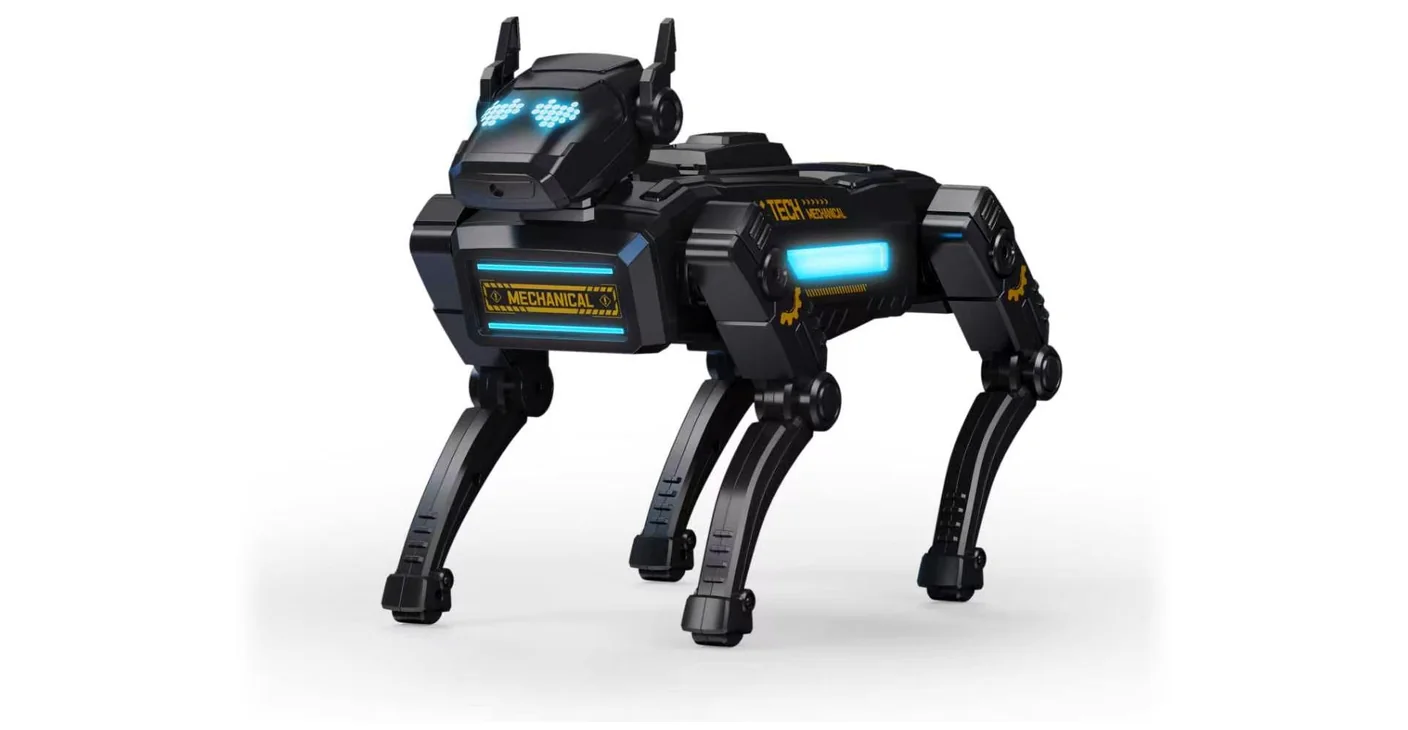
Importing interactive robot dogs is not only a product purchase. It is a combined decision about market positioning, product function, compliance documents, retail packaging, carton planning and shipment timing. A clear process helps a buyer compare suppliers on the same basis and reduces costly changes after tooling or mass production begins.
This guide outlines a practical workflow for importers, distributors and retail brands planning their first or next robot toy program. Use it as a checklist when preparing quotations, samples and launch plans with a manufacturer.
1. Define the Market and Product Brief First
Start with the destination market, sales channel and target retail price. A product intended for a mass-market shelf may prioritize simple controls, robust packaging and a competitive landed cost. A premium stunt model may instead need stronger visual demonstrations, advanced actions and a broader feature set.
Write down the key requirements before requesting quotations: product type, chassis format, language, control method, battery expectation, packaging language, age positioning and estimated first-order quantity. A detailed brief makes supplier responses easier to compare and reduces assumptions on both sides.
- Confirm the market, channel and expected retail price band.
- Choose the product family and the features that support the sales story.
- Set a realistic first-order volume and delivery window.
2. Qualify the Manufacturer Before Comparing Price
Price is only meaningful after the supplier and scope are comparable. Review the factory's product range, assembly process, showroom, quality controls and ability to support OEM or ODM changes. For a robot toy program, confirm who develops the firmware, who manages certification and who controls packaging specifications.
Ask for current product documentation, factory images or a live video tour, and a clear quotation structure. A capable supplier should be able to explain what is standard, what is optional and which changes affect tooling, firmware, packaging or lead time.
A useful quotation should make the commercial scope visible, not hide important assumptions inside a single unit price.
Information to request with every quotation
| Area | What to confirm | Why it matters |
|---|---|---|
| Product | Model, functions, battery and accessories | Keeps quotations comparable |
| Customization | Logo, casing, firmware, sound and packaging | Defines the OEM/ODM scope |
| Commercial | MOQ, sample cost, deposit and Incoterm | Clarifies cash flow and delivery responsibility |
| Timing | Sample, certification, production and shipping lead times | Protects the retail launch calendar |
3. Validate Samples Against the Retail Plan
A sample should be tested as a retail product, not only as a technology demo. Check movement, voice interaction, app pairing, lighting, battery behavior, sound level and the stability of each action. Test the product with the intended user in mind and document every issue with photos or video.
Packaging should be reviewed at the same time. Confirm dieline, language, barcode placement, warning text, product images and carton quantity. When a sample, packaging proof and approval version are separated, the buyer can avoid confusion later in mass production.
4. Build the Compliance and Packaging File
Compliance requirements depend on the product, destination market and sales channel. Build a document checklist early and confirm that certificates, test reports and transport documents match the exact model and battery configuration being ordered. Keep certification work parallel to sampling and packaging wherever possible.
Create a version-controlled file for artwork, instruction manuals, labels, carton marks and product data. Record the approved version of each document so purchasing, quality control and logistics teams all work from the same source.
5. Plan Freight, Carton Data and Launch Timing
Before mass production, confirm carton dimensions, gross weight, units per carton, pallet plan and the Incoterm. These details affect freight quotations and warehouse planning. A small change in carton size can change the number of units per container and therefore the landed cost.
Work backward from the retail launch date. Allow time for sample approval, artwork confirmation, production, inspection, booking and transit. A realistic schedule should include buffer for document review and shipment coordination rather than assuming every step will happen at its fastest possible speed.
With a defined brief, comparable quotations, documented samples and a controlled compliance file, a robot dog import program becomes much easier to manage. The buyer can focus on building the market while the factory executes a known production scope.